

Challenges in leading AI initiatives
Insights from latest AGX Singapore roundtable
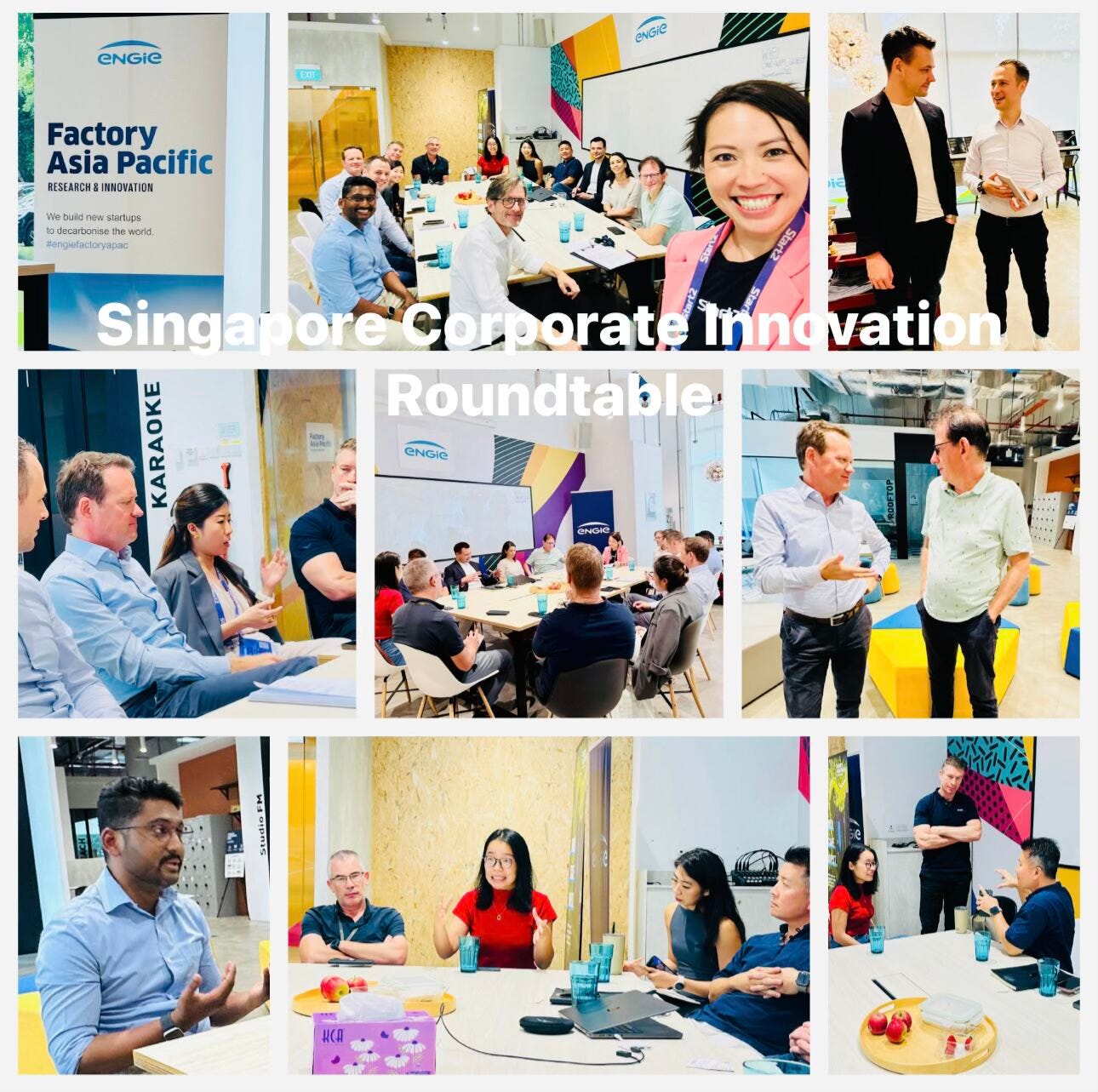
AI deployment in corporates has been an ongoing theme that the Asia Growth Exchange has been tackling in our Singapore sessions. In our last session, we looked at which AI applications are actually scaling beyond pilots, how companies decide who to trust — big tech vs. startups and what’s really slowing adoption down: tech, talent, or culture. Below are some of the insights shared around the table in November 2025.
The Gap Between POCs and Scale
Quick wins are clustering around sales enablement, customer support, invoice processing, and compliance—areas with structured data and clear ROI. But transformative use cases in R&D, manufacturing operations, and complex workflows? Still largely experimental.
“We did lots of POCs and more than 100 POCs per year. But how many really went into implementation? Not that many.”
The same pattern emerged across industries. Another executive noted that their company runs numerous pilots across departments.. The disconnect between experimentation and enterprise-wide transformation remains stark.
The Real Barriers Aren’t Technical
Data infrastructure challenges persist, but organizational factors dominate: unclear governance ownership, risk-averse decision-making, and the absence of leadership willing to champion transformation through the messy middle.
“If you want to drain a lake, don’t ask the frogs”
Middle management—those who’ve built departments and influence—often become the primary obstacles. One executive put it bluntly: “There’s definitely the concern not only they lose the job but maybe their influence... team size and all that.”
The Wrong Department to Lead AI
A consensus emerged around the table about IT departments. Built to protect systems and minimize risk, they’re fundamentally misaligned with rapid AI experimentation.
“The funny story is that you have this capability of AI which is enormous. It’s growing every day, it’s moving forward. You have the data treasure on the other side and in between these is just a large river and you cannot connect these two dots.”
“What we see with our customers... quite often the IT department blocks things. They want to do the groundwork... they have always an idea. People who are of the opinion, I know the best, I can do that.”
Trust and Fear Coexist
Teams struggle with AI outputs they can’t interrogate or validate. One pointed question about an innovation management AI tool: “This agent has effectively replaced the innovation facilitator job... what makes the agent so smart that it can determine that my idea is bad?”
A critical success factor: extensive testing with historical data to build trust. Meanwhile, productivity gains threaten established roles. As one participant observed: “The same roles over us, all of us... we are all white collar people. It rolls over white collar like robotics rolled blue collar. The best automated plants globally now have maybe 10% of the people they had 10 years ago. Expect the same in the white collar area.”
Distribution Beats Innovation
Startups face brutal procurement cycles and data access restrictions. Big tech’s integration advantage—Microsoft Copilot, Salesforce Einstein, Google Gemini—wins by default, even when specialized solutions might deliver superior outcomes. The hyperscalers’ advantage is overwhelming.
One participant drew a telling parallel: “If you look at the adoption of Slack and Microsoft Teams. Arguably, Slack is a slightly better product... However, distribution matters the most. Microsoft Teams market share versus Slack is significantly different. It’s massive.”
The Startup Paradox
Even successful venture client programs struggle. The procurement barrier remains: “You end up immediately again in this bureaucratic thing... if you to kind of prove you have been there for five plus years.”
The Core Competence Question
Few organizations have clearly defined what constitutes proprietary advantage worth protecting versus commodity capabilities that can be automated or outsourced.
“A lot of companies need to define within the new world what is our core competence. Is AI related to that core competence? Is R&D for a pharmaceutical company core competence? Absolutely. Is customer relationship management a core competence? Is production a core competence?”
“Feather-Light Touch” Implementation
The verdict? We’re still in the experimentation phase. The pressure for radical transformation hasn’t arrived.
“We’re all playing around a little bit... what it takes to scale is not only technically, it’s also leadership commitment. And there will be a lot of people who are very unhappy. Transformation means more unhappy people.”
Most organizations are doing “light touch” implementation with AI—optimizing at the margins rather than fundamentally restructuring how work gets done.
The 5% Reality
“The 5% basically make it into production, 95% fail... you see these huge promises from every AI company on the planet. They can do everything... let’s get first simple things before we go to AI agents.”
Success Stories: What’s Actually Working
One company deployed an AI agent for idea validation that reduced project setup time by 80%. One industrial company uses AI to optimize production across remotely operated plants worldwide, balancing different product types based on real-time demand data.
One large retailer has automated procurement negotiations entirely. “They’ve taken it out completely. It’s all AI, it’s all AI agents, and the satisfaction from the vendors is up.”
The Human Factor
One participant summarized the cultural challenge perfectly: “We did some internal research with our employees on using AI in the personal environment in their private life compared to business life—there was a tremendous difference... this culture factor and fear factor is certainly driving adoption, flexibility or resistance.”
What Shifts in 2026?
“The big wave is this unconscious wave. Things are developing and suddenly you realize, I’m too late. But then it’s too late.”
“Everything comes at a huge cost. And data is just like the beginning of it. There’s so much more in terms of figuring out how can we make it work. As with a lot of things, onuances start to happen once you dig in.”
“I know a few other companies who are much more radical, but they’re the minority. Fire half of their sales people and empower the other half with AI tools.”
The Questions for 2026
Will external pressures—such as margin compression, competitive breakthroughs, and market consolidation—finally push risk-averse leadership beyond pilot programs?
Or will this undercurrent develop slowly enough that organizations miss their strategic window, only realizing too late when the impact on profit and loss becomes undeniable? The technology is ready. The organizations are not.